
Boiling Over – When emotions rise faster than you can contain them
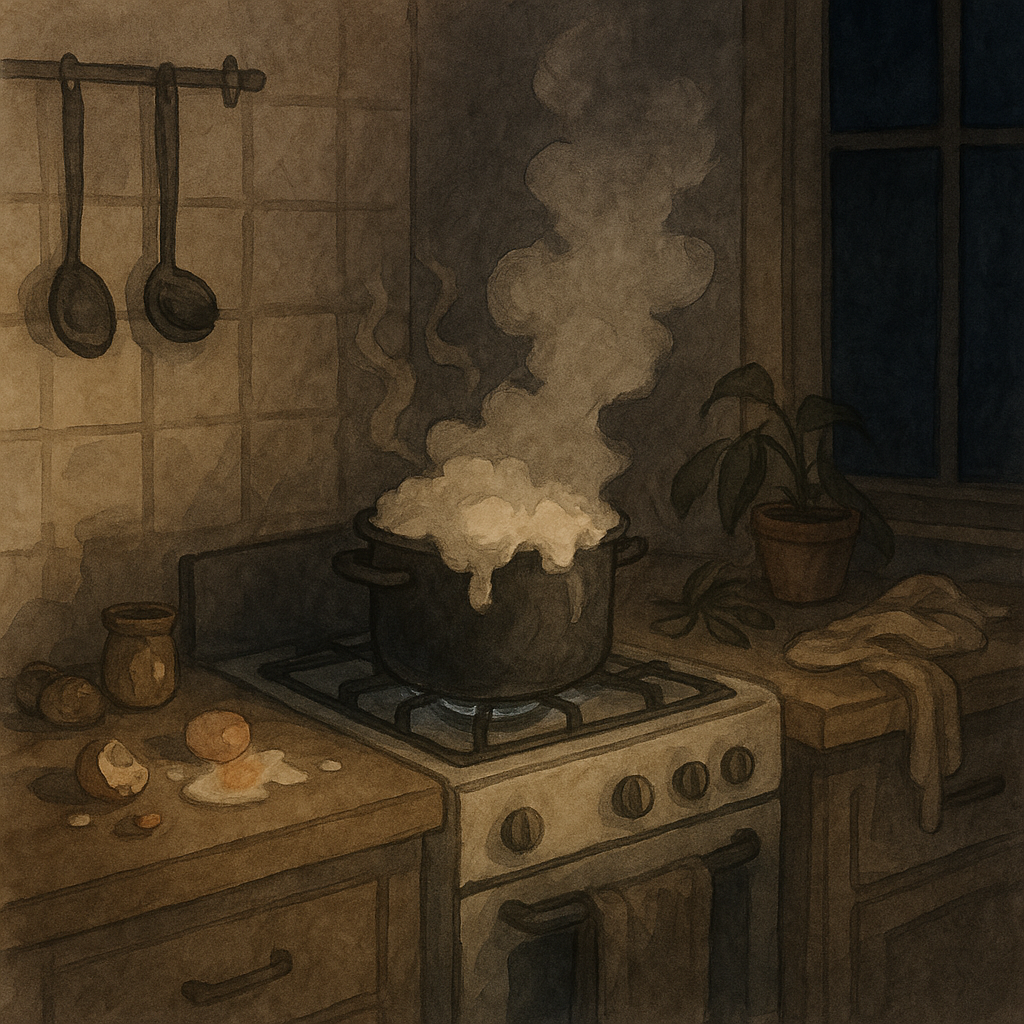
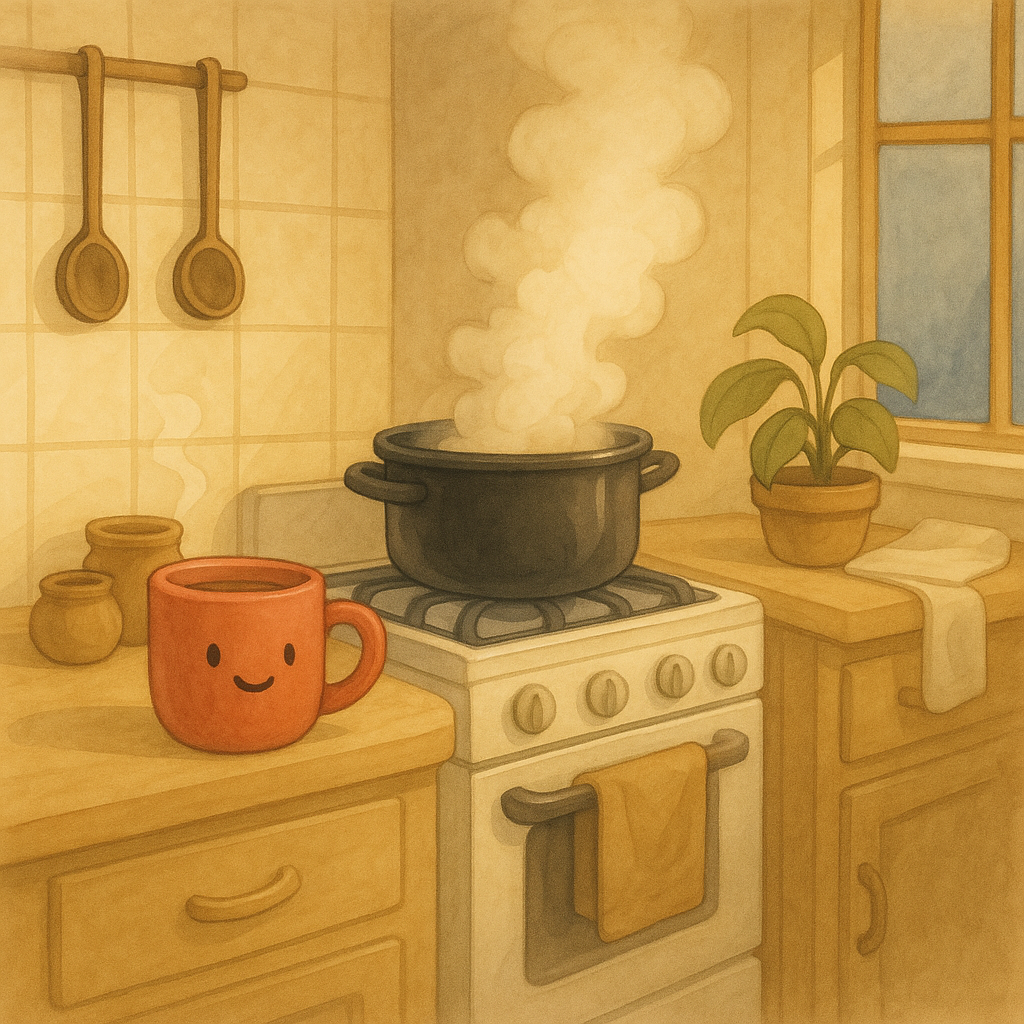
Boiling over is what happens when too much builds at once. Emotions stack. Demands don’t slow. There’s no space left to breathe. In the kitchen, it looks like pans scorching, lids rattling, spills you didn’t see coming. Inside you, it can feel just as loud.
This page isn’t here to tell you to calm down or pull yourself together. It’s here to help you release pressure safely — one small moment at a time. These cards are for moments when things already feel intense, offering grounding, containment, and a way back from the edge when everything feels like it’s about to spill.
Little Kitchen Helps

When the Lid Starts to Rattle 🧯
When a pot is left on high heat too long, the lid begins to shake. Steam builds underneath, pressure searching for a way out. Nothing is wrong with the pot — it’s doing exactly what happens when there’s no release. Boiling over inside you can feel the same. Too much held in, too fast, with nowhere to go.
Place one hand on the table or surface beside you. Press your palm down gently and hold for three slow seconds. Then lift your hand away. That press and release is your signal: pressure can leave without exploding.
When the Heat Has Nowhere to Go🧯
Sometimes nothing is burned yet — but the warning signs are loud. A pot rattles on the stove, steam pushing hard against the lid. You can hear it before anything spills. That sound is pressure asking for release. Inside you, boiling over often begins the same way. Irritation, tightness, the feeling that one more thing will be too much. You’re not failing — you’re noticing the moment before the spill.
Place one hand lightly on your chest and the other on your thigh. Exhale slowly through your mouth, like letting steam escape. Do it once more, longer this time. You didn’t turn the heat off. You just gave the pressure somewhere to go.
When the Pan Is Too Small🧯
Sometimes the problem isn’t the heat — it’s that the pan is too small. Everything inside gets crowded. Liquids surge, edges spill, and suddenly there’s no room for movement. In cooking, the fix isn’t force. It’s space. When you’re boiling over, your inner world can feel the same. Too many feelings in too tight a place.
Stand or sit with your feet planted firmly on the floor. Press your heels down gently, then release. Do that three times — press, release. Imagine the excess heat draining downward, out through your feet, into the ground. You are not getting rid of the feeling — you are giving it somewhere to go.
Pressure Has a Sound🧯
When a pot is about to boil over, it doesn’t happen silently. The lid begins to rattle. Steam pushes harder. The sound changes before the spill ever comes. In the kitchen, that noise is a warning — not a failure. Inside you, rising emotion often gives signals too: tight shoulders, shallow breath, racing thoughts. Nothing has gone wrong yet. This is simply the moment to notice the pressure.
Place one hand lightly on a surface near you — a table, armrest, or your leg. Press down just enough to feel resistance. Hold for two slow breaths, then release the pressure. You’re reminding your body: I can feel the buildup without spilling.
When Everything Is Too Loud🧯
When too many appliances run at once, the kitchen fills with noise — the hum of the fridge, the clatter of dishes, the fan whirring, the timer beeping. Nothing is technically broken, but the overlap becomes overwhelming. Inside you, boiling over can feel the same. Not one problem — just too many inputs hitting at once.
Pause and choose one sound around you right now — even a quiet one. Let everything else fade into the background for three slow breaths. You’re not fixing the noise. You’re reducing how much you’re taking in.
Too Much at Once🧯
When a blender is overloaded, it doesn’t just struggle — it stalls. The motor hums, the blades stop moving, and everything inside locks up. The problem isn’t failure. It’s too much at once. Inside you, boiling over doesn’t always look loud. Sometimes it looks like freezing, shutting down, or going blank. That’s still pressure — just trapped instead of spilling.
Place one hand on a solid surface near you — a table, chair, or your leg. Press down gently for three seconds. Release. Press again, just as gently. You’re reminding your body: there is support beneath me. You don’t have to move everything right now.
When Too Much Seasoning Hits at Once🧯
Sometimes a dish is ruined not because of one mistake, but because everything was added too fast. Salt, spice, heat — all correct on their own, but overwhelming together. There’s no single fix. The problem is the pile-up. Boiling over inside you can feel the same way. Too many inputs. Too many emotions. Nothing wrong with you — just too much landing at once.
Place one hand flat on the surface beside you. Name one thing that feels like “too much” right now — just one. Silently say: “This is enough to notice.” Leave the rest unnamed for now. You don’t have to hold everything at once.
When the Burner Won’t Turn Down🧯
Sometimes the burner is already too high. No amount of stirring fixes it. In the kitchen, the only option is to move the pan — lift it off the heat for a moment so it doesn’t burn everything inside. Pressure doesn’t always mean you failed to manage it. Sometimes it means the heat was simply too much.
Place both feet flat on the floor. Press your toes gently downward, then release. Do it once more, slow and deliberate. Imagine lifting a pan off the burner — not fixing the meal, just preventing damage. You’re allowed to step back without quitting.
When Too Much Is Added🧯
In the kitchen, a dish can tip fast. One more pinch of salt. One more spice. One more step done too quickly. What was almost right suddenly isn’t. Inside you, boiling over can happen the same way. Not from one big thing — but from one more added when you were already full.
Place one hand palm-up on your thigh. Slowly turn it palm-down, like setting something aside instead of adding it in. Say quietly (or think): “Nothing more needs to go in right now.” Pause for one breath.
Too Much at Once🧯
In cooking, adding more doesn’t always fix a dish. Too much salt, too many spices, too many ingredients at once can overwhelm the whole thing. What started out workable suddenly feels ruined. When everything is layered on top of everything else, the balance is lost. Inside you, boiling over can happen the same way. Not because one thing was too much — but because too many things arrived without pause.
Pause where you are. Name one thing (silently or out loud) that is weighing on you right now. Now imagine setting that single item on the counter — not throwing it away, just placing it down. Take one slow breath. You don’t have to fix the whole dish. You’re allowed to remove one ingredient from the heat.
When the Burner Is Too High🧯
Sometimes a burner is turned too high without you realizing it. The pot hasn’t boiled yet, but everything inside is agitated — rattling, vibrating, moments away from spilling. Nothing is wrong with the food. The heat is just too much for where things are right now. Inside you, this can feel like restlessness, irritation, or pressure without a clear cause. It’s the moment before the boil.
Place one hand on the surface beside you — a table, your leg, the chair. Press your palm down gently, as if steadying a pot that’s starting to shake. Hold for three slow breaths. You’re not fixing anything. You’re stabilizing the moment before it tips.
When Everything Sloshes at Once🧯
When a pot is overfilled, even a small movement makes everything slosh toward the edge. Nothing dramatic has to happen — it’s already too full. Boiling over moments are often like that. It’s not one big thing. It’s too much held at the same time.
Place one hand on your thigh. With the other hand, slowly move it side to side in a gentle, rocking motion — like steadying a pot so it doesn’t spill. Breathe normally for three slow rocks. You are allowed to steady things without fixing them.
When Everything Feels Too Loud🧯
In the kitchen, sometimes nothing is burning — it’s just loud. Timers beeping, dishes clattering, the fan humming, water running. Too many sounds at once can make even a calm cook upset. Inside you, boiling over doesn’t always come from one big thing. It can come from too much input, too many signals, no quiet place to land.
Slowly name three sounds you can hear right now. Then name one sound you wish you could hear instead (quiet, rain, hum, silence). You don’t have to make it happen. Just notice the difference. Sometimes pressure eases when the noise is acknowledged.
When Everything Feels Too Tight🧯
Sometimes in the kitchen, everything seizes at once — a lid stuck, a jar that won’t open, hands gripping too hard. The problem isn’t strength. It’s tension. Things loosen when pressure eases, not when you force them. Inside you, boiling over can feel the same. Muscles clench. Thoughts narrow. Everything tightens at once. That doesn’t mean you’re failing — it means you’re holding too much.
Unclench your jaw. Drop your shoulders an inch. Slowly open your hands, palms facing up. Hold for one breath. You are allowed to loosen without fixing anything.
One Thing Too Many🧯
In the kitchen, adding just one more ingredient at the wrong moment can ruin a dish. Too much salt. Too much heat. Too many things at once. Nothing was wrong with what was already there — it was the timing and the piling on. Boiling over inside you can feel the same way. Not because you’re weak, but because something extra landed when you were already full.
Place one hand palm-up in front of you. Imagine it’s holding everything you’re already carrying. Now gently turn your palm over, as if setting something down instead of picking something up. Pause for one breath. You’re allowed to stop adding things right now.
When the Lid Won’t Stay On🧯
Sometimes a pot boils so hard that no lid will contain it. Steam rattles, liquid spills, and the answer isn’t forcing the lid down — it’s lifting it just enough so the pressure can escape. When emotions surge this way, containment doesn’t come from holding tighter. It comes from creating a safe release.
Exhale through your mouth like you’re fogging a mirror — slow and steady. Do it once more, a little longer. Let your shoulders drop as the breath leaves. You’re not stopping the boil. You’re letting the pressure out.
When Everything Tastes Too Much🧯
Sometimes a dish isn’t ruined — it’s just over-seasoned. Too much salt, too much heat, too many strong flavors at once. Nothing is wrong with the ingredients. They’re just overwhelming together. Boiling over inside you can feel the same way. Too many emotions, conversations, expectations, memories — all hitting at once. The problem isn’t you. It’s that everything arrived together.
Pick one sensation in your body that feels strongest right now. Not the whole overwhelm — just one. Say quietly (out loud or in your head): “I’m noticing this.” Then imagine gently setting everything else aside, like pushing unused spices to the back of the counter. Stay with that single sensation for one slow breath. You don’t have to fix the whole dish. You’re allowed to focus on one flavor at a time.
When the Burner Won’t Turn Down🧯
Sometimes the heat doesn’t respond right away. You turn the knob, but the burner stays high for a moment longer. The pan keeps roaring even though you’ve already tried to lower it. That lag doesn’t mean you failed — it means heat takes time to release. Inside you, emotions can work the same way. You may already be doing the right thing, even if the intensity hasn’t eased yet.
Place one hand on a solid surface near you — a table, your leg, the floor. Press gently for three seconds, then release. Say quietly (or internally): “I’ve already turned it down.” Give your body one slow breath to catch up.
When the Noise Lingers🧯
Sometimes the burner is already off, but the pan is still screaming. Heat lingers. Noise continues. Nothing is actively wrong — it just hasn’t settled yet. Boiling over moments can feel the same. The trigger may have passed, but your body hasn’t caught up. That doesn’t mean you’re failing. It means things are still releasing.
Place one hand flat on a surface near you. Press down gently for two seconds. Release. Press again — a little lighter. Release. Notice how the pressure fades on its own. Your nervous system unwinds the same way: gradually, not instantly.
After the Spill🧯
After something boils over, the kitchen goes quiet. The burner is turned down. The mess is still there, but the danger has passed. Nothing needs to be decided yet. This moment isn’t about cleaning — it’s about safety returning. Inside you, boiling over doesn’t mean failure. It means something reached its limit and released. Now comes the part where you’re allowed to exist without reacting.
Place one hand on the surface nearest you — a table, chair, counter, or your leg. Press down just enough to feel resistance. Say silently: “I’m here. The worst moment has passed.” Take one slow breath.
“When you pass through the waters,
I will be with you, and when you pass through the rivers,
they will not sweep over you.
When you walk through the fire, you will not be burned,
the flames will not set you ablaze.” (Isaiah 43:2 NIV)
To Top of Page